 7.1 °C


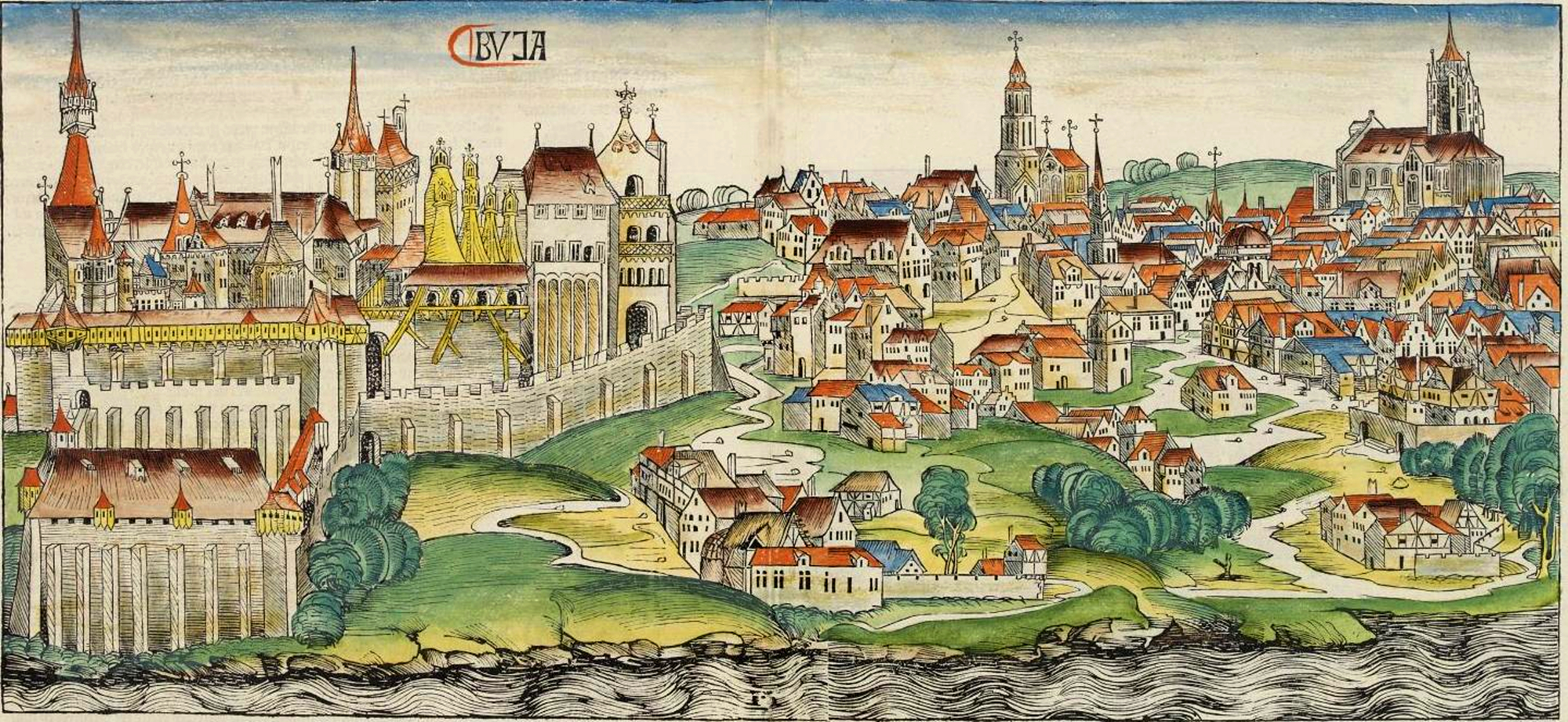
Budapest looks like a straightforward combination of Buda + Pest, but both names are much older than the modern capital and their origins are surprisingly uncertain. Before the city's unification, Pest-Buda was common. So why did Budapest win?
The story takes us from medieval place names and a cave on Gellért Hill to Attila the Hun, German translations, István Széchenyi and the creation of the modern capital in 1873.
Budapest is actually a 19th-century name
Budapest did not become the official name of a city until Buda, Pest and Óbuda were united in 1873. Before that, Buda and Pest were separate settlements on opposite sides of the Danube, while Óbuda (Old Buda) occupied the site of ancient Aquincum. The two cities were commonly referred to together as Pest-Buda or Buda-Pest.
The name Budapest was proposed by statesman and namesake of the Chain Bridge, István Széchenyi in 1831, in his book Világ. He presented the suggestion through an imaginary English correspondent:
“Fővárostok nevét Budapestre kellene változtatni…” or “Your capital's name should be changed to Budapest.”
Széchenyi wanted Buda and Pest to become one capital rather than a divided one. He also compared the sound of Budapest with Bucharest, suggesting that it would quickly become familiar.
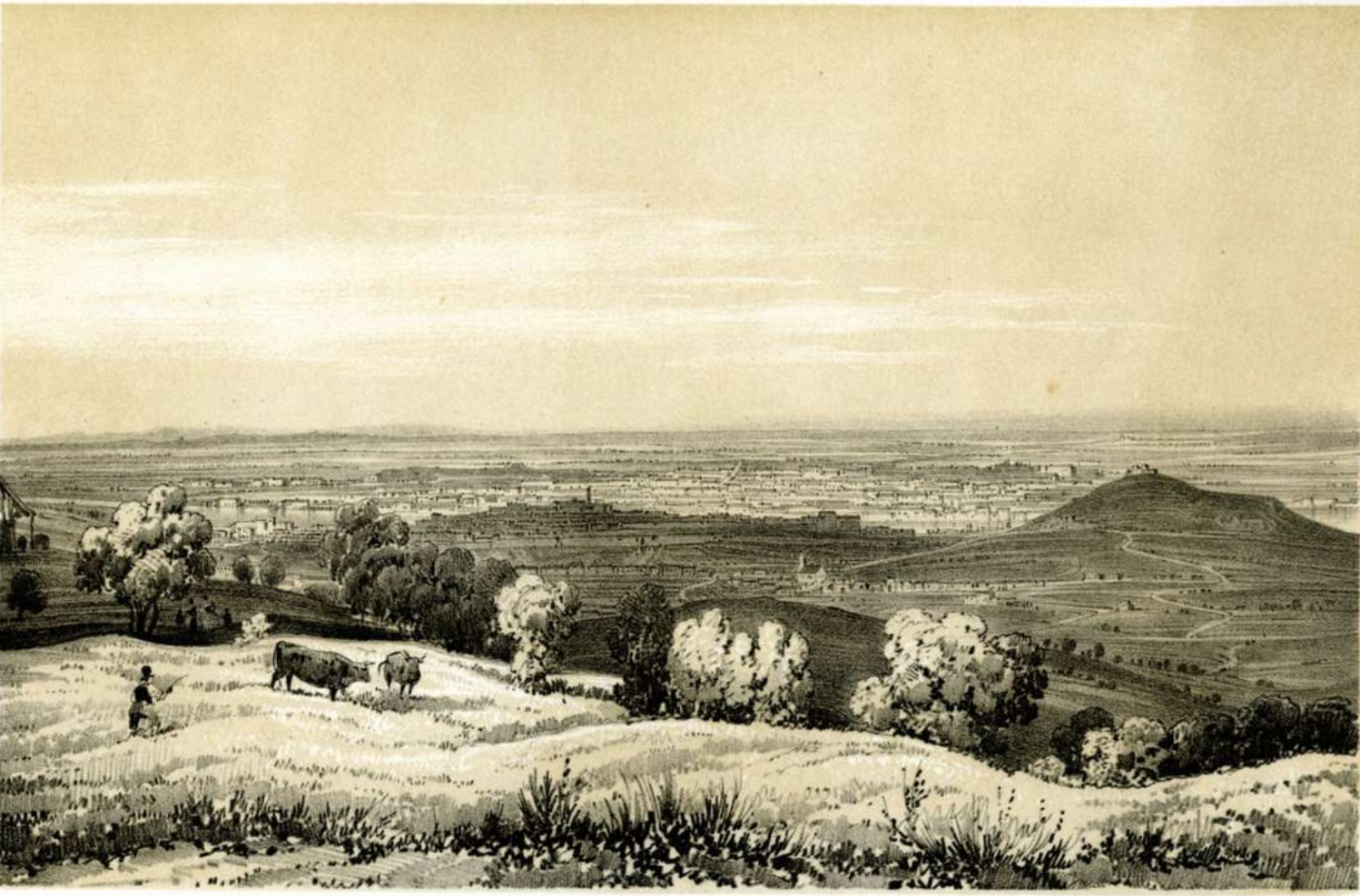
Ofen und Pesth vom Schwabenberge by Rudolf Alt
So the name Budapest has not evolved naturally. It was a deliberate name for the idea of a united city. It gradually gained ground during the following decades, even while Buda and Pest remained legally separate.
Why wasn't it Pest-Buda?
There is no known official decision explaining why Buda ultimately came first. In fact, Pest-Buda was very common, and Pest was the larger, more, more populous, more economically dynamic city in the 19th century.
Several factors may have favoured Buda-Pest and eventually Budapest. Buda was the older royal centre and had considerable historical prestige, while the two names were already sometimes written in that order. Maps also placed Buda on the left and Pest on the right, although there is no evidence that this was an official reason.
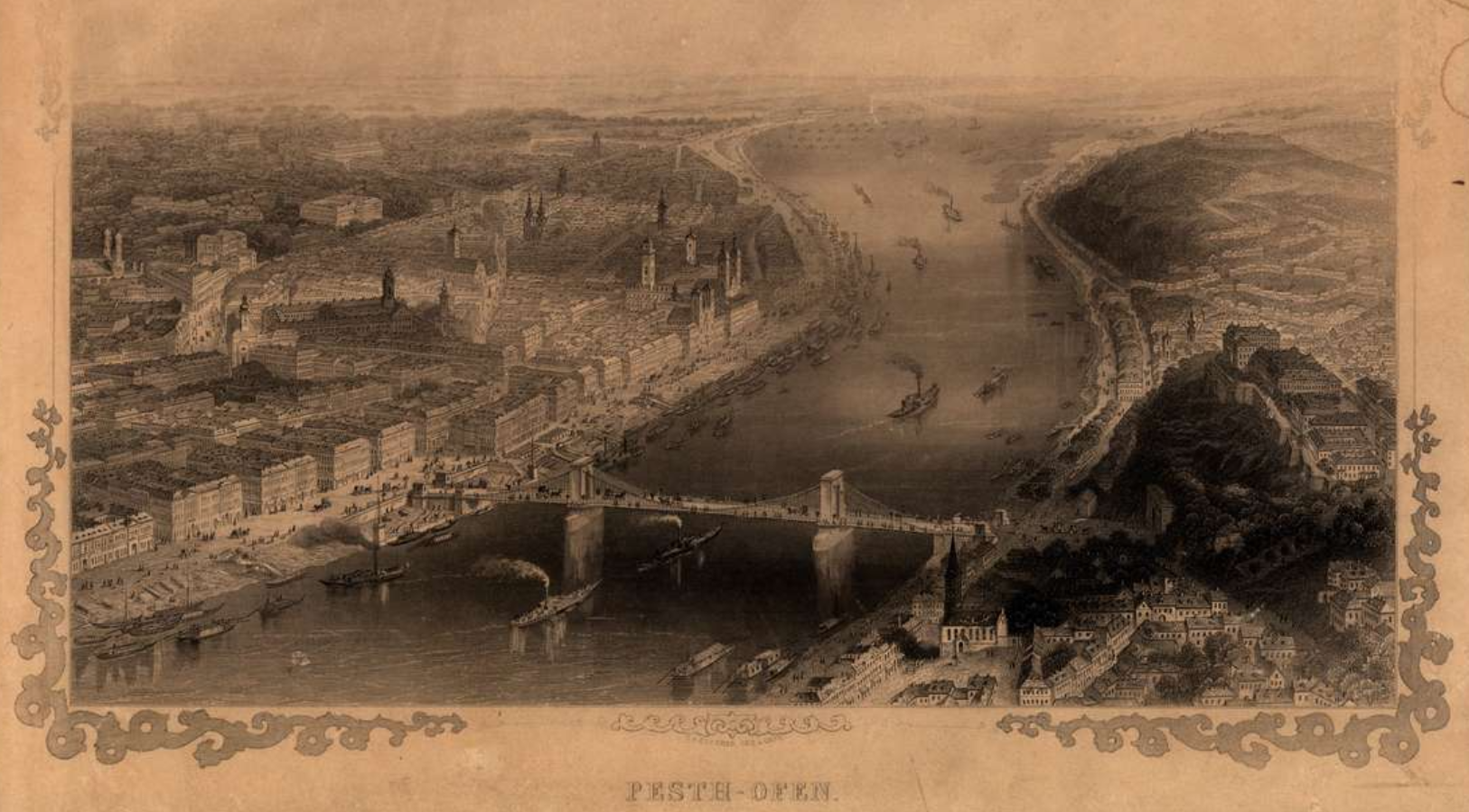
There was also a simple linguistic advantage: Budapest sounded like one place, rather than two names joined together. More importantly, Széchenyi was trying to establish a new civic identity for a united capital, not merely a collective nickname.
What does “Buda” actually mean?
The most famous explanation connects Buda with Buda (Bleda), the brother of Attila the Hun.
Medieval Hungarian chronicles associate the city with Attila and his brother Buda, portraying Buda as a ruler who gave his name to the settlement. The tradition became deeply embedded in Hungarian historical culture and was later immortalised by writers such as János Arany in Buda halála. But this is not an established etymology. The chronicles were written centuries after the 5th-century Huns, and the historical Hun ruler's name is generally reconstructed as Bleda, rather than Hungarian Buda. Medieval chroniclers were working with much later traditions.
A more prosaic possibility is that Buda was originally a personal name that became a place name. Medieval Hungary had people named Buda, and place names derived from personal names were common. Kiss Lajos's Földrajzi nevek etimológiai szótára, one of the major Hungarian place-name reference works, treats this type of explanation seriously. Another theory connects Buda with the Slavic voda, “water”, perhaps reflecting the area's abundant springs and the waters around ancient Aquincum. But there is no medieval source actually explaining Buda as “water”, so this remains a linguistic hypothesis.
The scientific answer is therefore that Buda's ultimate origin is uncertain: a personal name is a serious possibility; voda has also been proposed; the Attila/Bleda connection is primarily a medieval tradition rather than a demonstrable etymology.
Pest: “oven”, “cave” — or something else?
The name Pest is generally connected with a Slavic word whose meanings included oven, furnace or cave/rock cavity. The old German name for Buda, Ofen, makes this particularly intriguing: Ofen also means “oven” in German.
The leading explanation connects Pest with the Gellért Hill area, rather than the modern Pest side of the city. Gellért Hill contains a large natural cave system and was famous for its hot springs and geothermal activity. Medieval sources referred to the area as Mons Pestiensis, or Pest Hill. One possibility is therefore that Pest originally described a distinctive feature on the Buda side of the Danube — perhaps a cave or “oven-like” cavity, visible from today's Pest side of the city.
The Hungarian State Nature Conservation authority notes the possible connection between the Gellért Hill cave and the name Pest, while medieval historical-geographical research stresses that both “oven” and “cave” are possible interpretations and that the original referent cannot be established with certainty.
So the popular claim that Pest means “oven” because people once burned limestone there should not be treated as established fact.
Where is Buda, really?
There is another twist: before the Mongol invasion of 1241–42, Buda was not necessarily the name of today's Castle District.
The name Buda was associated with the settlement around ancient Aquincum — today's Óbuda. After the Mongol invasion, King Béla IV chose the hill on the opposite side of the Danube for a new fortified royal town. The settlement that grew around the castle became Buda, while the older settlement became Óbuda, literally “Old Buda”.
The distinction eventually became permanent. In other words, the Buda that gave its name to modern Budapest was itself the successor to an older settlement whose history reaches back to Roman Aquincum.
The unification of Buda and Pest
The formal city merger came after decades of increasing economic and social integration.
The 1872 Act XXXVI provided for Buda and Pest, together with Óbuda and Margaret Island, to be united as one municipality under the name Buda-Pest. Legally, therefore, the new capital was still Buda-Pest, not Budapest.
The law's justification noted that the idea of uniting the two cities had already occupied public opinion for more than 25 years. The 1848 legislation had already treated Buda-Pest as the seat of the Hungarian government, while the cities' growing connections made political unification increasingly logical.

The 12 points of the Hungarian Revolutionaries of 1848 already used the name Buda-Pest
The new municipality officially came into existence on 17 November 1873. By then, however, Széchenyi's shorter form, Budapest, had already become widely established, making him the godfather of the capital.
So, what does Budapest actually mean?
The safest summary is:
Buda is probably a medieval place name, possibly derived from a personal name. A connection with Slavic voda (“water”) has also been proposed. The identification with Attila's brother Bleda belongs to medieval Hungarian tradition and cannot be demonstrated as the actual etymology.
Pest probably derives from a Slavic word associated with an oven, furnace or cave/rock cavity. The name may originally have been connected with the Buda-side area around Gellért Hill before becoming associated with the settlement on the opposite bank.
Budapest: a deliberately coined 19th-century compound, first clearly proposed by István Széchenyi in 1831, and subsequently adopted for the united capital created in 1873.
The result is a name built from two much older and partly mysterious place names — with a medieval legend, a cave, a royal city, a Roman settlement and a 19th-century reformer all contributing to the story.
