 10.9 °C


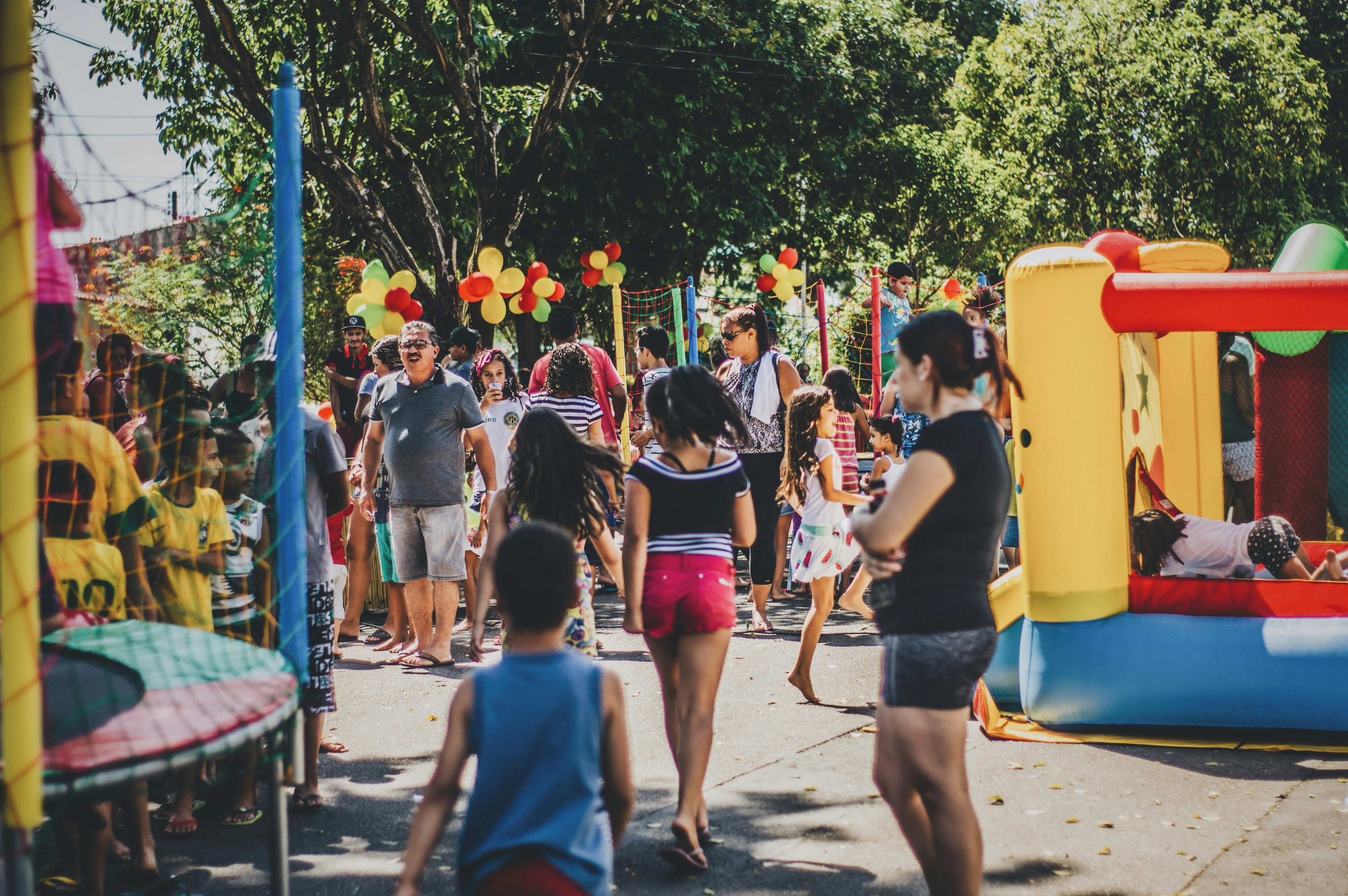
Budapest has no shortage of famous sights and tourist hotspots. But once you've seen the major attractions, you may start wondering: where do Budapesters themselves go to relax, meet friends and spend their free time?
The answer is not one particular bar, square or neighbourhood. Budapest is a large city of very different districts, and locals tend to spend their free time close to home. A student in District XI might spend an evening on Bartók Béla út, a family in Óbuda might head to the Római Danube bank, while friends living in District VIII might meet around Mikszáth Kálmán tér.
There is also an important difference between Budapest's tourist nightlife and its everyday social life. The famous ruin bars are certainly part of the city's culture, but they are only one small part of it. Locals also meet in neighbourhood cafés, traditional pubs, beer gardens, parks, markets, terraces, swimming pools and along the Danube.
If you want to get a feeling for the Budapest that exists beyond the main tourist routes, these are some of the places and neighbourhoods worth knowing.
Bartók Béla út: cafés, terraces and an easy-going atmosphere
This long, District XI boulevard runs from the area around Szent Gellért tér towards the inner part of Buda and has developed into one of the city's most popular café and cultural areas. It combines everyday neighbourhood life with independent cafés, restaurants, bars, galleries and cultural venues. We particularly love Gdansk and Kelet Café in the area.
The elegant atmosphere is noticeably different from the centre of Pest. People come here to meet friends for coffee, have lunch, sit outside with a drink or spend an evening without necessarily turning it into a big night out.
The surrounding streets are also worth exploring. The area around Móricz Zsigmond körtér and Gárdonyi tér has a particularly strong neighbourhood atmosphere, with students, young professionals and long-time residents mixing together.
For visitors, Bartók Béla út is particularly useful because it is easy to combine with a walk around Gellért Hill, the Danube or the Buda side of the city.
Margit körút and the Buda side
Buda is generally quieter and more residential than central Pest, but that does not mean it lacks places to meet. Margit körút, together with the streets around Széll Kálmán tér and the nearby neighbourhoods of District II, has become an increasingly interesting area for cafés, restaurants and bars.
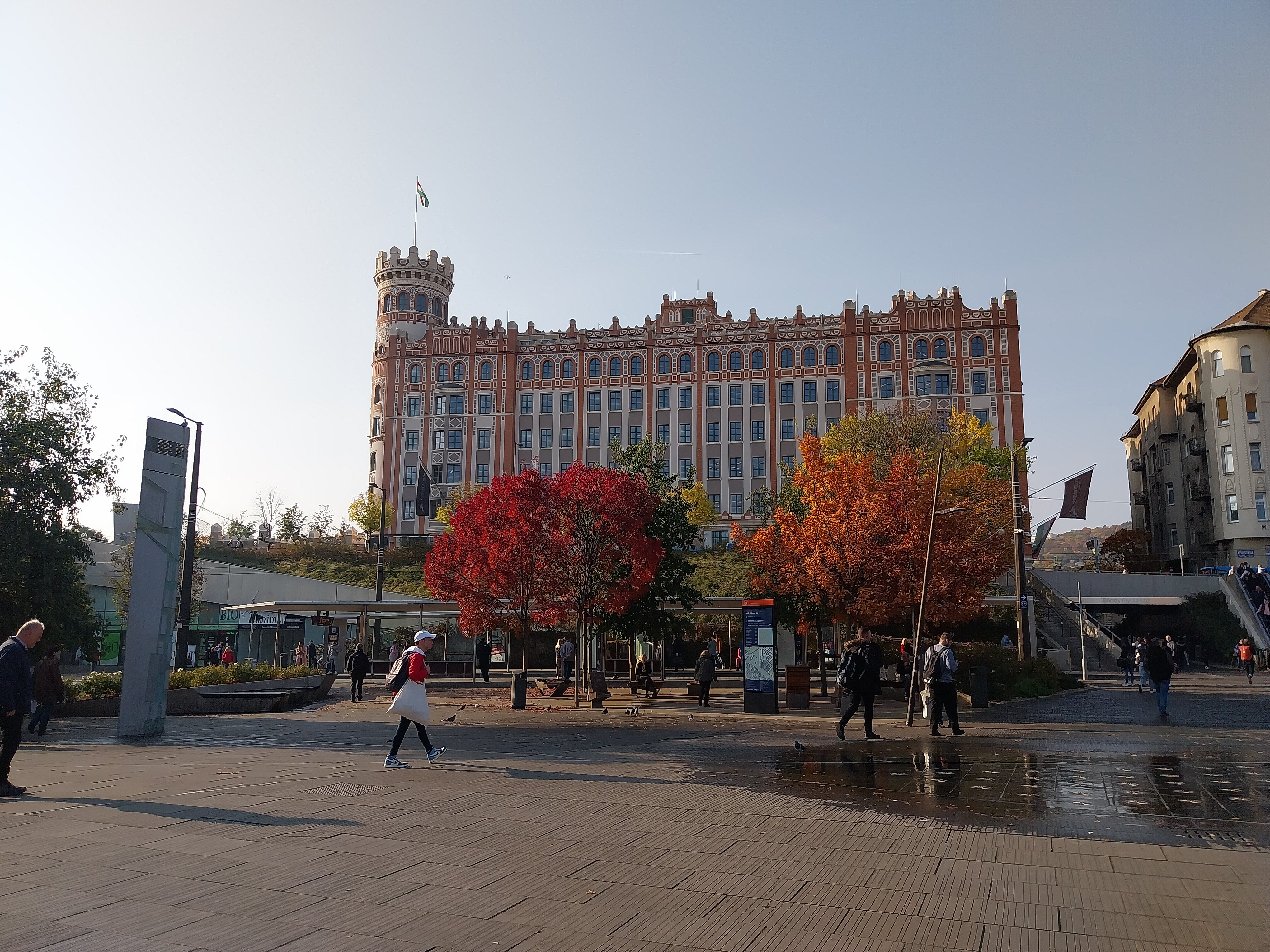
This is the sort of place where people who live in Buda can meet without travelling into the centre of Pest. The clientele tends to be more neighbourhood-oriented, and the pace is generally less frenetic than in the Jewish Quarter.
For a visitor, the area can be a good choice if you want to experience an evening in Budapest without spending it among stag parties and large groups of international visitors.
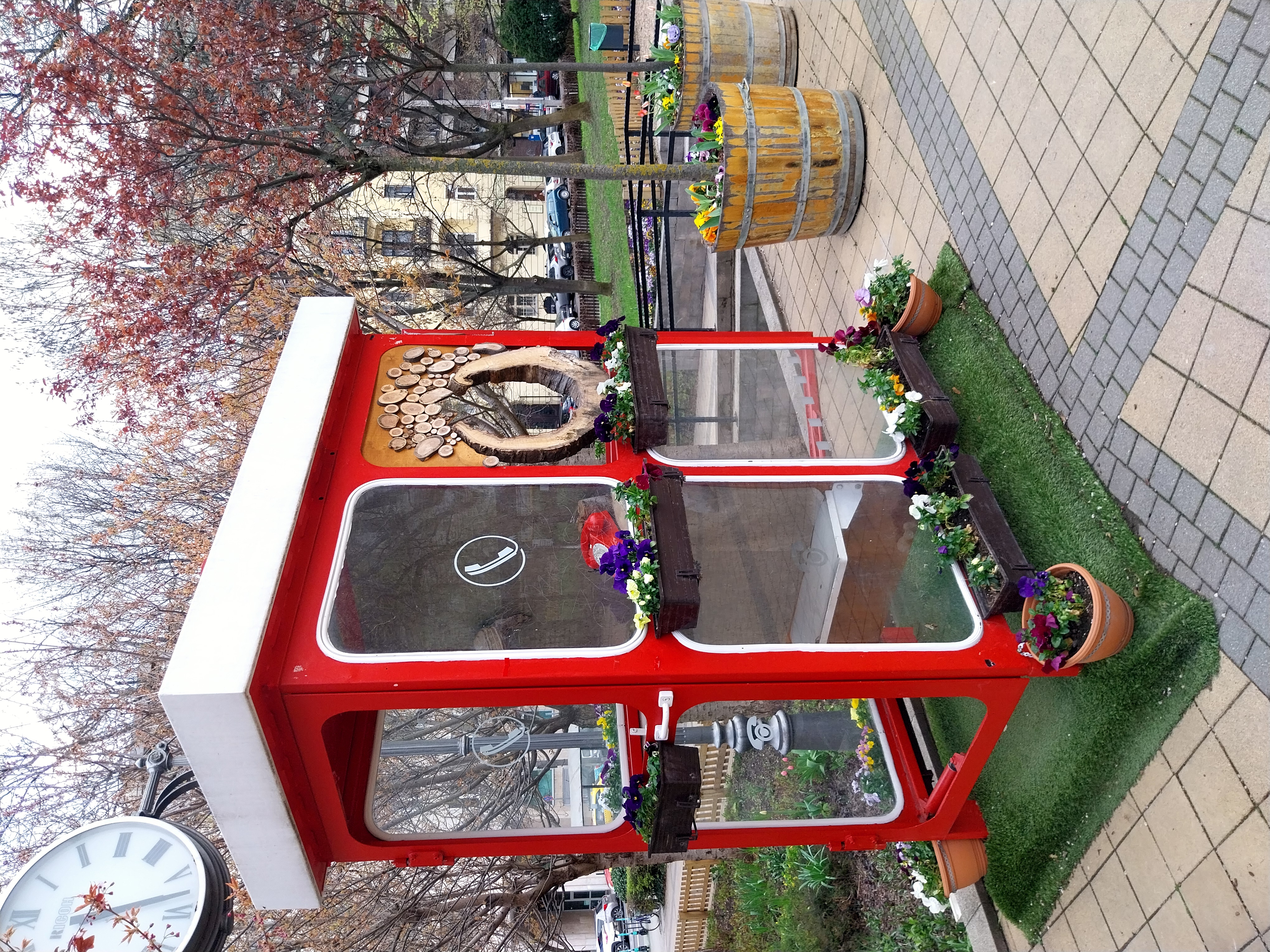
Mikszáth Kálmán tér and the Palace District
One of the most pleasant examples of Budapest's changing neighbourhoods is Mikszáth Kálmán tér in District VIII.
The square sits among the elegant 19th-century buildings of the Palace District, an area once associated with Budapest's aristocracy. Today it has a much younger and more relaxed character, partly because of the nearby universities.
Students, residents and people working in the surrounding offices use the cafés and restaurants around the square as everyday meeting places. It is particularly pleasant in the warmer months, when people spill out onto the terraces.
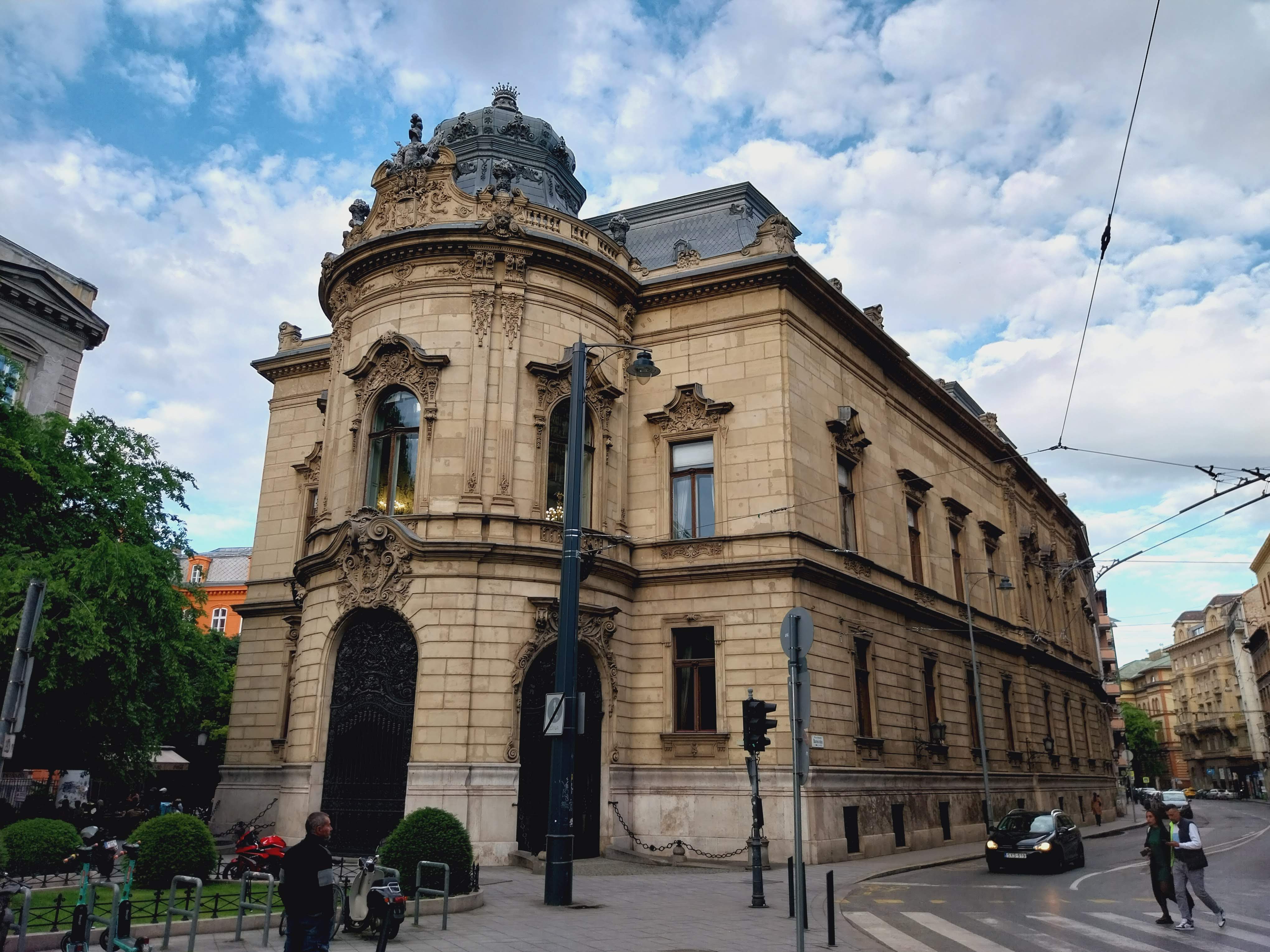 There are many popular pubs and bars around the Metropolitan Ernő Szabó Library
District VIII has undergone considerable change in recent decades, and its inner neighbourhoods have developed a reputation for cafés, cultural venues, independent shops and alternative nightlife. Lumen, Auróra and Gólya are among the venues associated with the area's creative and alternative scene.
The important thing about this part of Budapest is that you do not need a particular attraction to justify coming here. The neighbourhood itself is the attraction.
Népsziget: Budapest's riverside hangout
Now this place is truly a hidden gem! Far from downtown, just below the Újpest Railway Bridge, Népsziget Island has developed into one of Budapest's most relaxed riverside hangouts. What was once a rather forgotten industrial corner of the city is now home to a cluster of informal bars and outdoor venues, including Kabin, Wasser Budapest, Perem and Szitakötő. The area began changing with the opening of Kabin in 2017, followed by Wasser and Perem, creating a small waterfront nightlife district.
The atmosphere is very different from the busy bars of central Pest. These are primarily outdoor places, with plenty of space to sit by the Danube, have a beer or something to eat, watch the sunset and spend a summer evening with friends. The clientele includes locals, families, cyclists, dog owners and people simply looking for somewhere to escape the city without actually leaving it.
The setting is a large part of the attraction. Népsziget still has a somewhat wild, undeveloped character, with trees, old industrial remnants and the river surrounding the venues. You can walk or cycle across the railway bridge and immediately find yourself in a completely different side of Budapest. The easiest way to get there from the centre, is to take metro M3 to Gyöngyösi utca or Újpest-városkapu stations, and cross one of the bridges to the island. It will require some walking.
Ferencváros: the craft-beer side of Budapest
South of the centre, Ferencváros (District IX) has developed its own café, restaurant and nightlife scene. The area around Tompa utca and the streets towards the Danube is particularly popular with residents. Further south, the surroundings of the National Theatre, Müpa Budapest and the Danube have created another concentration of cultural and leisure destinations.
Ferencváros is also associated with Budapest's craft-beer culture. The district has developed a reputation for its concentration of beer bars and independent venues, with Élesztő being one of the best-known examples. It occupies a former industrial building and helped establish the area as one of the city's major destinations for Hungarian craft beer.
The atmosphere here is different from the party streets of District VII. People might come for a beer after work, dinner with friends or a concert rather than specifically to go clubbing.
The quieter side of the city centre
For a more relaxed evening, places around the inner-city streets of District V and VI can be much more representative of how many Budapesters socialise: sit down, order something to drink and talk.
The city centre has many similar places. Some are tiny wine bars, some are cafés that become bars in the evening, and others are traditional pubs that have been around for years.
The Hungarian word kocsma is useful here. It is usually translated simply as "pub", but a traditional kocsma can be considerably more informal than the image of an English pub suggests. It can be somewhere to have a cheap beer, meet friends, watch football or simply sit and talk.
Parks are social spaces too
During warm weather, the city's parks and riverside areas become enormous informal meeting places. People sit on the grass, bring food and drinks, exercise, walk their dogs or simply spend an evening outdoors.
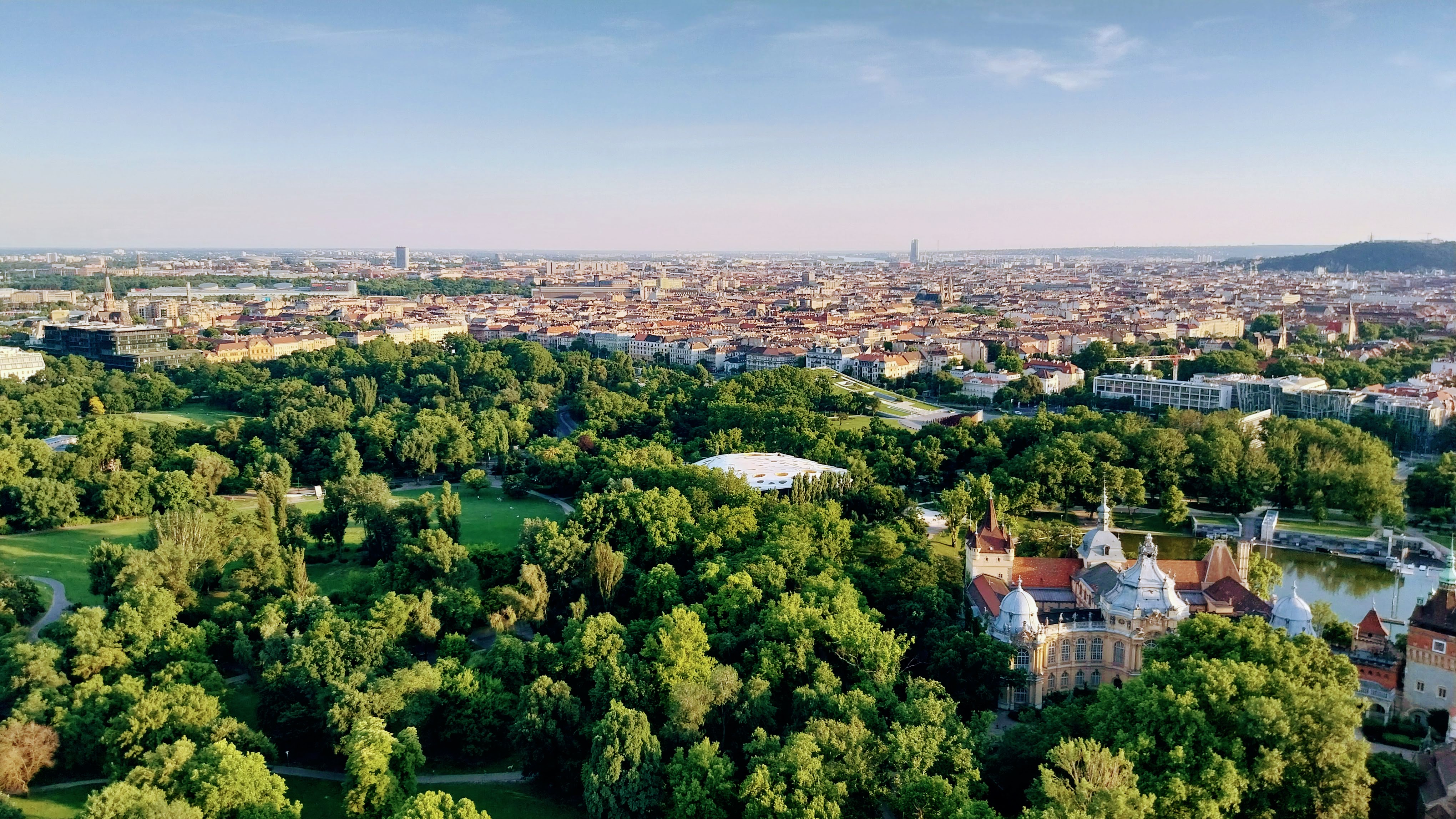
Margaret Island is perhaps the most obvious example. The island is used by locals throughout the year, but especially during the warmer months. Joggers come for the running track, families use the large green spaces, and groups of friends meet for picnics.
The important distinction is that Margaret Island is not simply a tourist attraction. It functions as one of Budapest's major recreational spaces.
The same applies to Városliget (City Park), although its enormous size means that different sections have very different atmospheres. Around the lake, the museums and the Széchenyi Baths, you will encounter plenty of visitors, while other parts of the park feel much more like an ordinary city park.
The Danube is one of the city's biggest hangouts
Budapest's greatest public space is arguably the Danube itself. The river divides Buda and Pest, but its banks also function as enormous communal spaces. On a summer evening, locals can be found sitting beside the water, walking, cycling, talking with friends or simply watching the city.
A popular stretches is around Római-part, in northern Buda.
The Római riverbank has a distinctly different character from the monumental central Danube. It is lined with informal restaurants, beer gardens and places to sit beside the river. People come here specifically to spend time outdoors, often combining food and drinks with cycling or walking.
It is particularly popular on summer evenings and weekends, when the riverside becomes a relaxed escape from the built-up city.
Liberty Bridge and the summer city
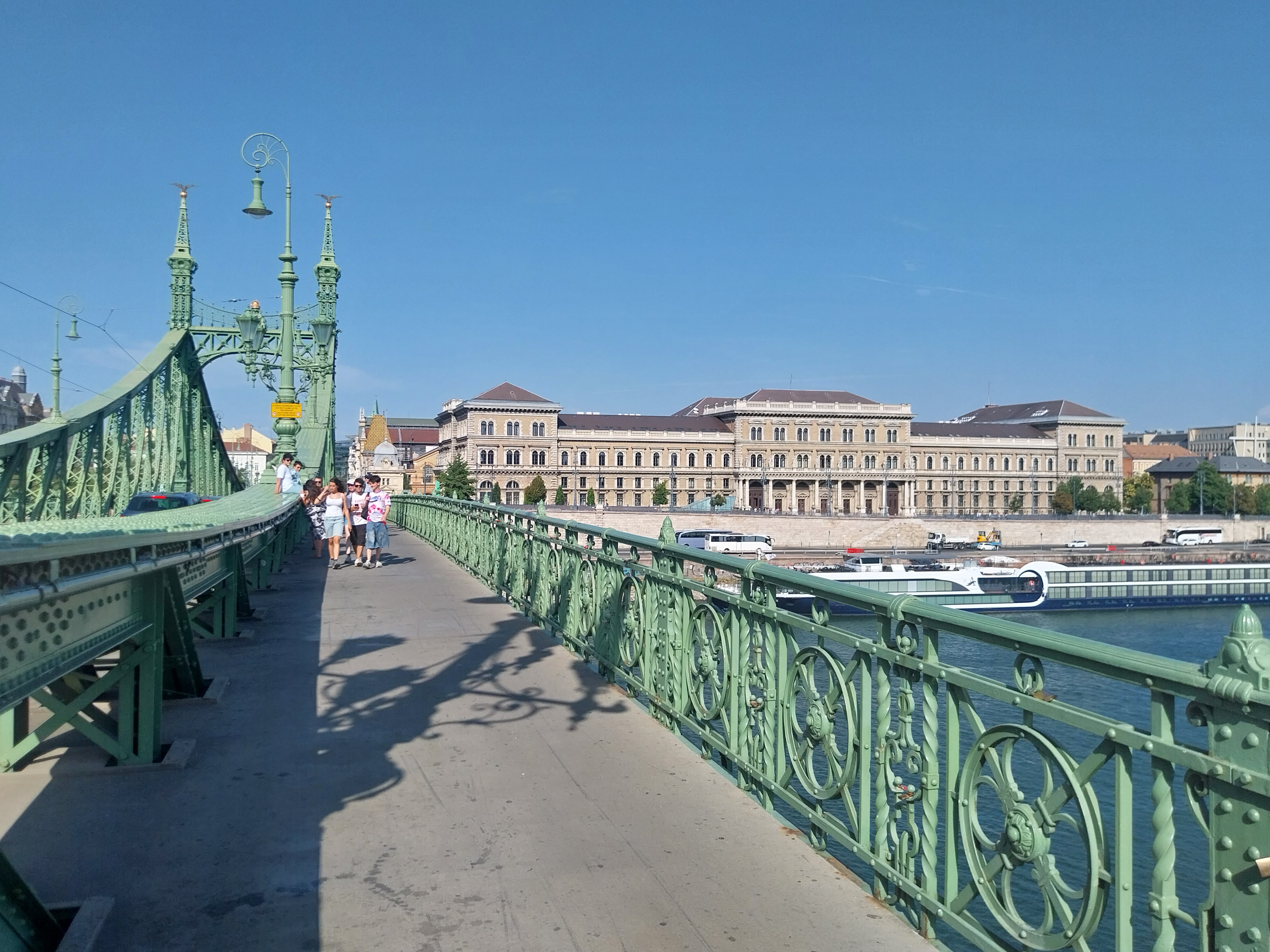
Liberty Bridge is a popular selfie spot for people to stop, take photos and enjoy the views over the Danube. On warm days, locals and visitors alike sit around on the bridge, watch the river and take in the city from a different perspective.
A much larger example of Budapest's summer outdoor culture is the Rakpart, when sections of the Danube embankment are closed to cars and opened to pedestrians. Instead of being used by through traffic, the riverside road becomes a long, open public space where people can walk, cycle, sit and simply enjoy being beside the river.
The Rakpart is not really an attraction in the traditional sense. Its appeal comes from having space to slow down in the middle of the city. People bring a coffee or something to eat, sit on the riverside steps, meet friends, watch the boats or enjoy the views towards Buda. On sunny days, the embankment can feel more like a giant outdoor terrace than a major traffic artery.
It also offers a different perspective of Budapest's most famous sights. From the Pest riverbank, you can look across at Buda Castle, the Matthias Church and the hills beyond, while the bridges and boats provide a constantly changing backdrop.
It illustrates something important about Budapest: when the weather is good, locals like to take the city outdoors. Terraces become crowded, parks fill up, the Danube banks become social spaces and streets normally dominated by traffic can take on a completely different atmosphere.
Markets and neighbourhood food
The Great Market Hall is certainly popular with visitors, but Budapest has many smaller neighbourhood markets where the atmosphere is considerably more ordinary. People come to buy vegetables, fruit, meat, cheese and baked goods rather than souvenirs.
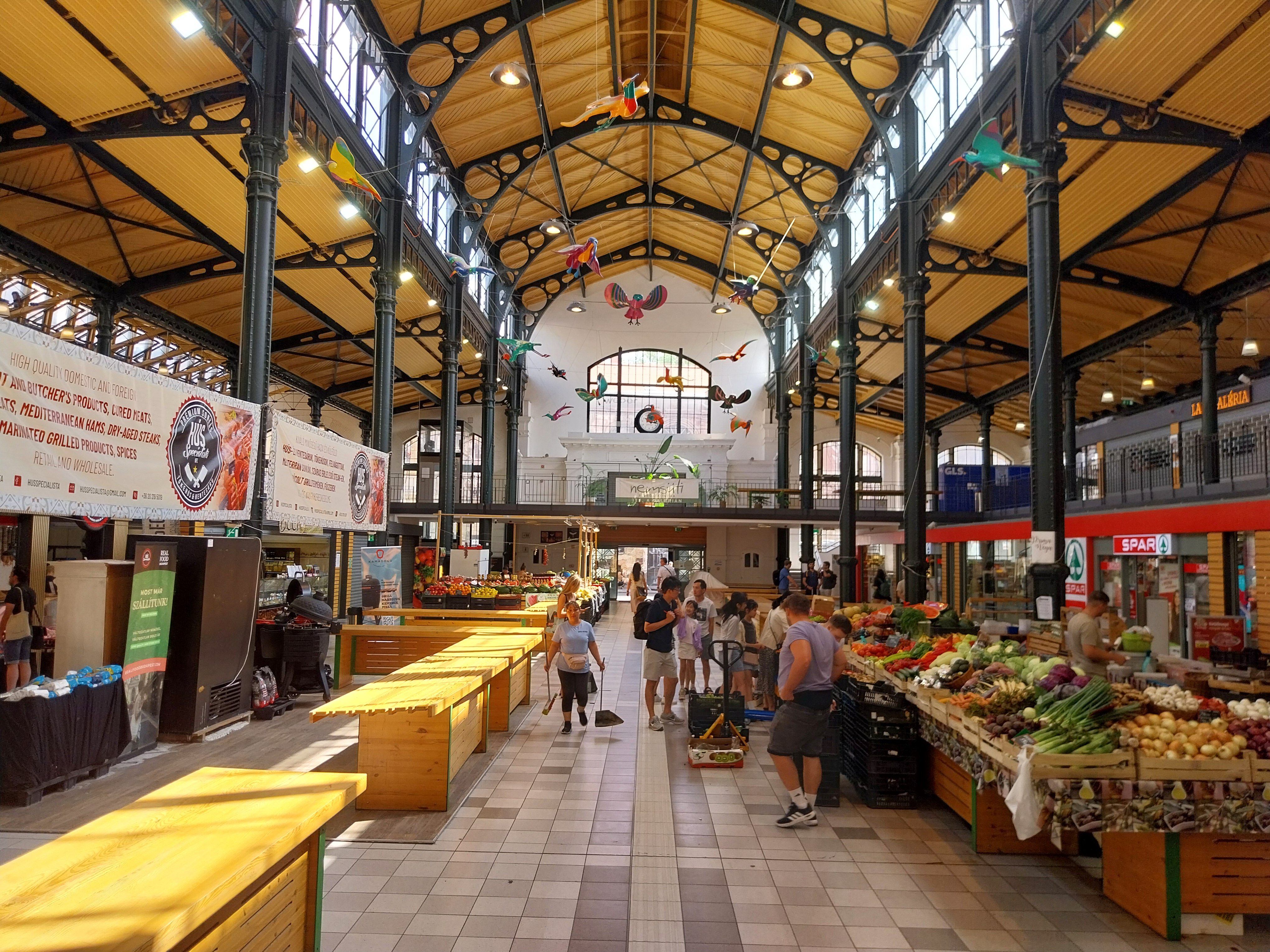
Markets are particularly useful for understanding the city's food culture. Hungarian cuisine is still closely connected to home cooking and seasonal ingredients, and many Budapesters continue to shop at markets and bakeries as part of their normal weekly routine.
The best time to see this side of the city is usually in the morning, when markets are being used primarily by local residents rather than sightseeing groups.
| Market hall | District | Address | Built |
|---|---|---|---|
| Central Market Hall (Nagycsarnok) | IX | Vámház körút 1–3 | 1897 |
| Rákóczi Market Hall | VIII | Rákóczi tér 7–9 | 1897 |
| Klauzál Market Hall | VII | Klauzál tér 11 | 1897 |
| Hunyadi Market Hall | VI | Hunyadi tér 4 | 1897 |
| Batthyány Market Hall | I | Batthyány tér 5–6 | 1902 |
| Hold Street Market Hall | V | Hold utca 13 | 1896–97 |

Cafés: the everyday meeting place
If you want to know where Budapesters meet during the day, start with cafés.
Budapest has a long coffeehouse tradition, but today's café culture is quite different from the grand historic coffeehouses that dominate tourist guides. Alongside those famous establishments there are hundreds of smaller cafés where people work, study, read, meet friends or simply spend an hour with a coffee.
A typical weekend might begin with breakfast or coffee before people head out for a walk, shopping or some other activity. Local guides frequently mention neighbourhood cafés such as Cirkusz, Zoska and Fekete as examples of this contemporary café culture.
The most interesting cafés for experiencing local life are often not the ones with the biggest interiors or the most elaborate decorations. Look for places filled with people who appear to have brought their laptops, newspapers, books or friends.
Thermal baths are part of social life
Budapest's famous thermal baths are obviously major tourist attractions, but bathing is not exclusively a tourist activity.
Thermal bathing has been part of Budapest's culture for centuries, and locals continue to use the city's baths as places to relax, swim and spend time with friends.

The experience varies considerably between the different baths. Some are dominated by visitors, particularly during the busiest parts of the day. Others retain a stronger neighbourhood character. For someone interested in local life, it is worth remembering that Budapest's bathing culture is not simply about sightseeing in beautiful historic buildings — for many residents, going to a bath is an ordinary leisure activity.
Where do young Budapesters go?
Districts VII, VIII, IX and XI are particularly important for the city's younger café, bar and cultural scenes. University students and young professionals tend to gravitate towards areas where there are plenty of affordable places to eat and drink and good public transport connections.
In District VIII, the alternative and cultural scene around places such as Auróra and Gólya has attracted a creative crowd, while District XI's Bartók Béla út offers a more polished café-and-terrace atmosphere. District IX has its craft-beer and cultural venues, while District VII remains the city's biggest concentration of nightlife.
But there is a catch: young locals do not necessarily go to the same places as young tourists.
A venue can be extremely popular with visitors and still be perfectly good, but if you want to encounter a predominantly Hungarian crowd, look for smaller neighbourhood venues rather than the biggest names in the tourist nightlife circuit.
Where do families hang out?
For Budapest families, weekends are often about getting outdoors, especially when the weather is good.
Margaret Island is one of the city's favourite family destinations. Children can run around the large lawns and playgrounds, while parents can walk, cycle or simply relax under the trees. The island also has the Musical Fountain, Japanese Garden, mini zoo and Palatinus swimming complex, giving families plenty to do without leaving the city.
Budapest Zoo and Botanical Garden is another classic choice, particularly for families with younger children. Located in Városliget, it can easily be combined with a walk through the park or a visit to the Great Playground, one of the city's largest playgrounds.

For a more adventurous day out, families head into the Buda Hills. Normafa is a favourite for walks, sledding in winter and picnics in warmer weather, while the surrounding hills offer numerous easy hiking routes. The Children's Railway is one of Budapest's most distinctive family activities, running through the hills between Hűvösvölgy and Széchenyihegy and providing an easy way to combine a train ride with a walk in the woods.
These places are a useful reminder that local family life in Budapest is not centred on the city centre. On a sunny weekend, many Budapesters simply head for the parks, hills, riverbank or island.
Conveniently we made two compilations of the best playgrounds on the Buda and the Pest side of the city.
And what about the famous ruin bars?
It would be strange to write about Budapest nightlife without mentioning ruin bars. They have become one of the city's most distinctive nightlife traditions, and although they are hugely popular with tourists, locals certainly use them too.
The most famous is Szimpla Kert, the venue that helped establish the ruin-bar concept in the early 2000s. Its rambling courtyards, mismatched furniture and unusual decorations have made it one of Budapest's best-known bars.
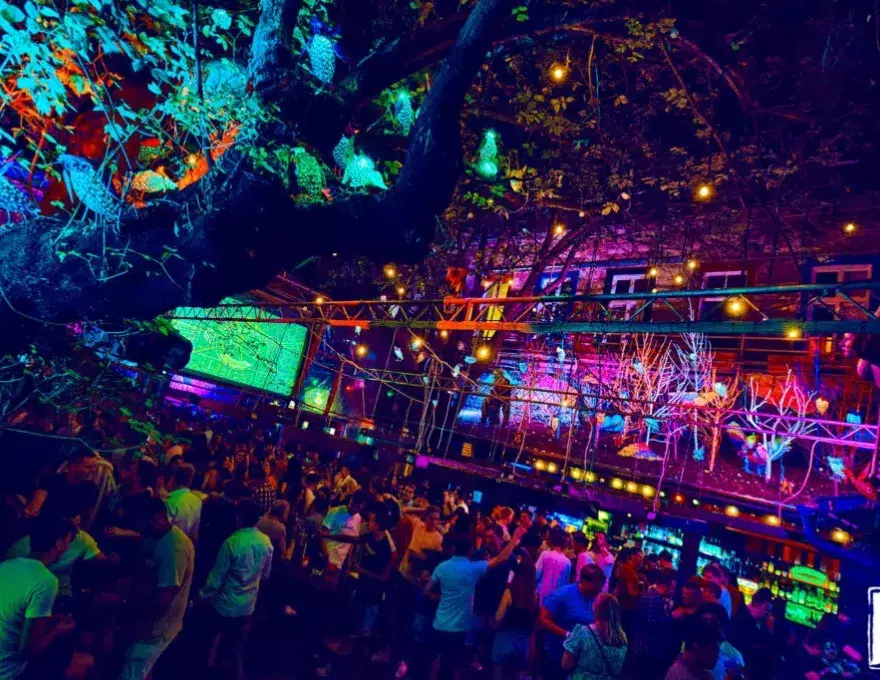
Other major names include Instant-Fogas, a huge nightlife complex with several rooms and different styles of music; Füge Udvar, a large courtyard bar popular with a younger crowd; Doboz, known for its distinctive courtyard and late-night atmosphere; and Dürer Kert, a popular live-music and outdoor venue.
The important thing to remember is that ruin bars are only one part of local nightlife. A Budapest resident might go to Szimpla or Instant-Fogas, but they are just as likely to spend the evening in a small neighbourhood pub, wine bar or café.
The Jewish Quarter — but beyond the ruin bars
It would be strange to write about Budapest nightlife without mentioning Erzsébetváros, particularly the historic Jewish Quarter. This is where visitors will find some of Budapest's most famous nightlife, including the city's internationally renowned ruin bars. Szimpla Kert, for example, remains one of Budapest's defining nightlife venues.
During the day, its streets are full of cafés, bakeries, restaurants, small shops and people going about their daily lives. In the evening, locals may meet at a wine bar, restaurant or smaller neighbourhood pub rather than at one of the giant nightlife venues.
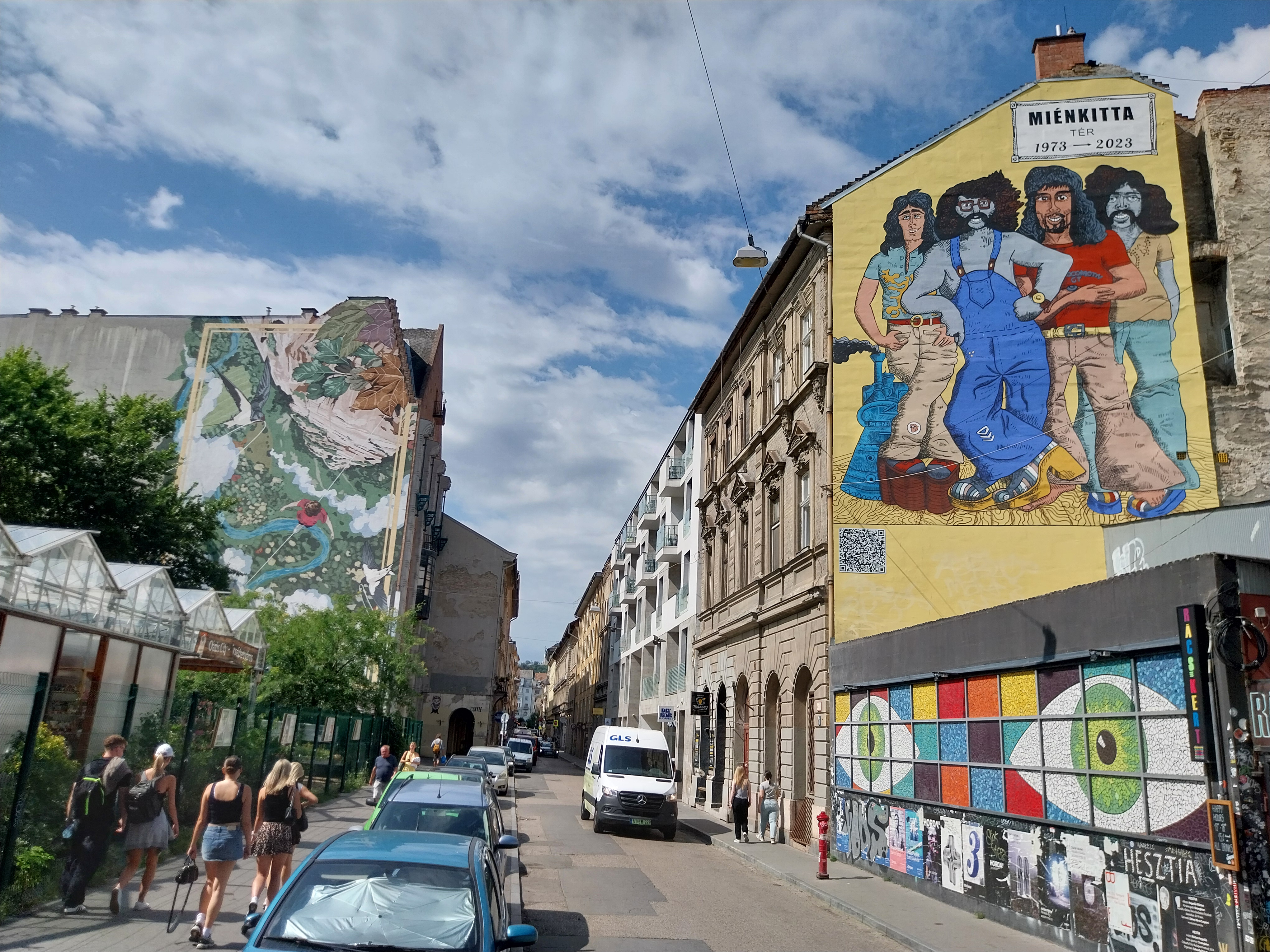
The trick is simply to move away from the busiest streets. The closer you get to the most famous party destinations, the more international the crowd becomes. A few streets away, the atmosphere can change considerably.
This is also one of Budapest's most densely packed neighbourhoods, so walking around without a particular destination can be rewarding. A small café, courtyard or bar that was not in your itinerary may end up being the most memorable stop of the evening.
The real secret: follow the neighbourhoods
Perhaps the best answer to "Where do locals hang out in Budapest?" is simply: near where they live.
Budapest is divided into 23 districts, and each has its own collection of cafés, restaurants, pubs, parks and meeting places. Even within the central districts, the atmosphere can change dramatically after a few blocks.
Instead of looking for one secret bar that supposedly only locals know about, pick a neighbourhood and explore it. You may not find Budapest's "best" bar or restaurant this way. You will find something more interesting: the places where Budapest is simply being Budapest.
