 10.9 °C


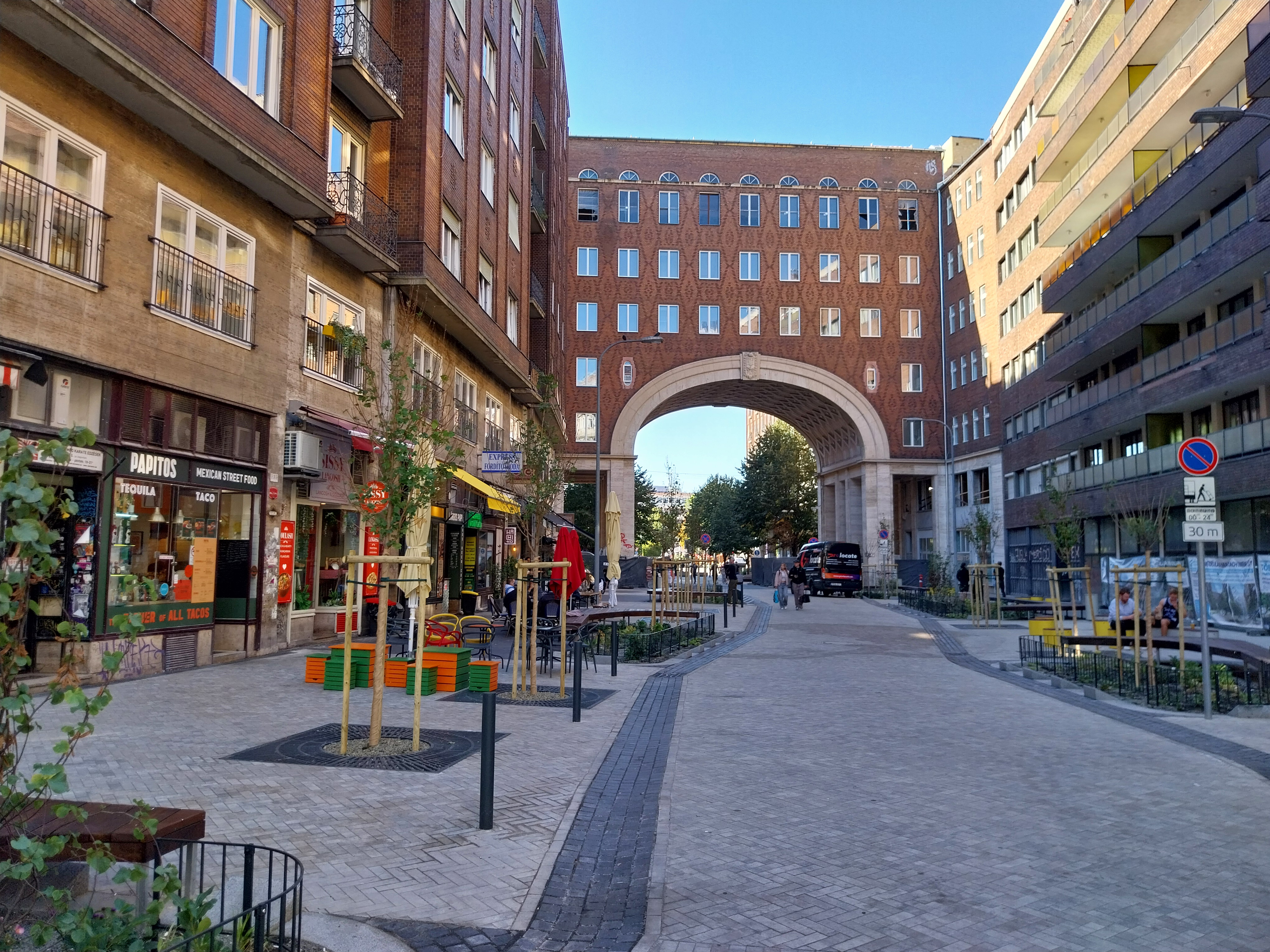
One of central Budapest’s busiest-looking spaces has just undergone a remarkable transformation. The grandiose entrance to the party district has been rebuilt as a pedestrian-friendly public space, completing the transforma
The renovation began in April 2026 and was carried out by the 7th District Municipality using its own funds. The project involved a full, “wall-to-wall” reconstruction of the street, replacing the previous road and sidewalks with a continuous surface at the same level. The intersection with Rumbach Sebestyén utca was also redesigned to make the area more accessible and safer for pedestrians.
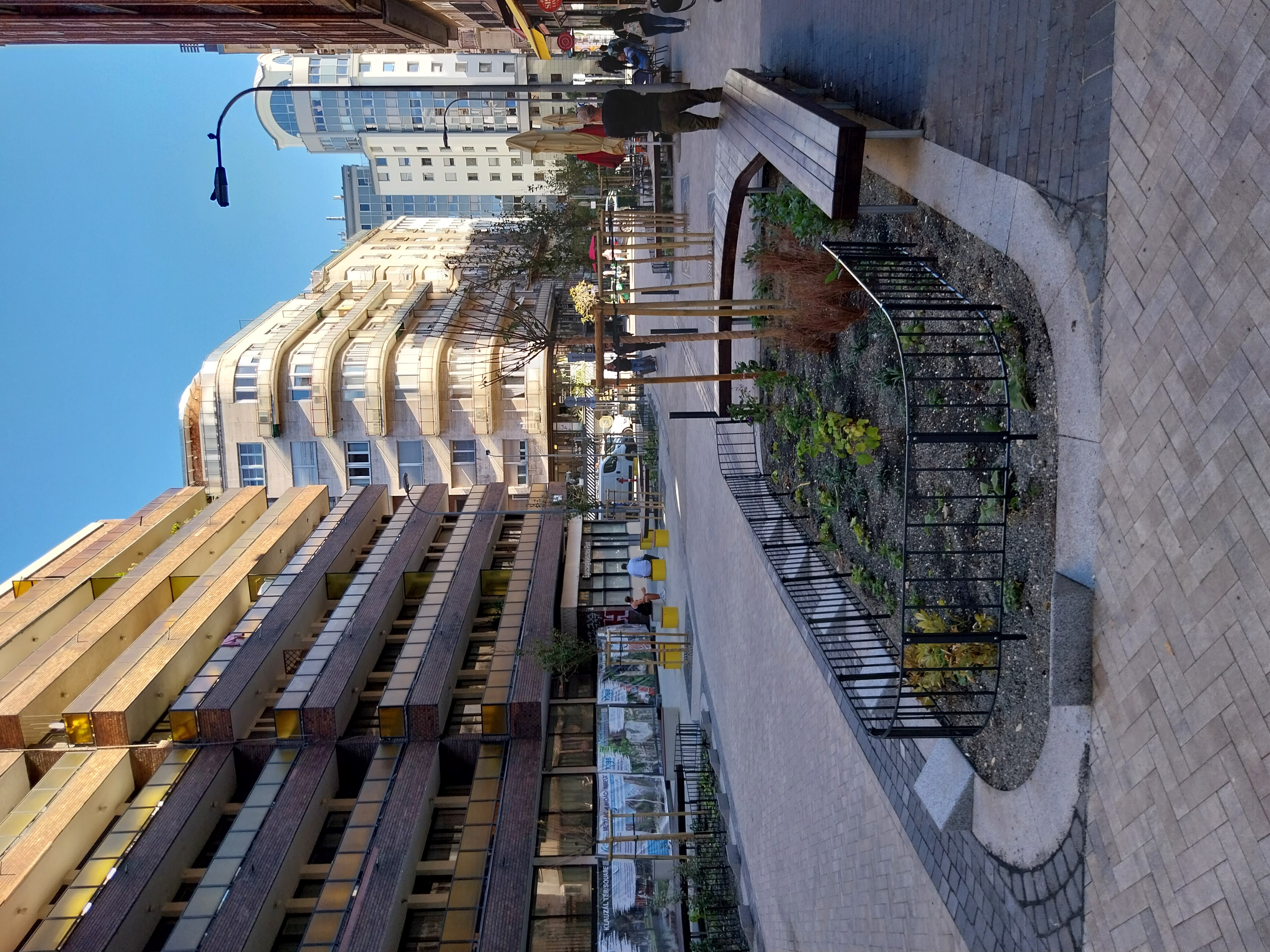
The result is a much greener and more inviting stretch of the city centre. Fifteen new trees have been planted, together with around 160 square metres of new green space. New paving, street furniture and bicycle racks complete the makeover.
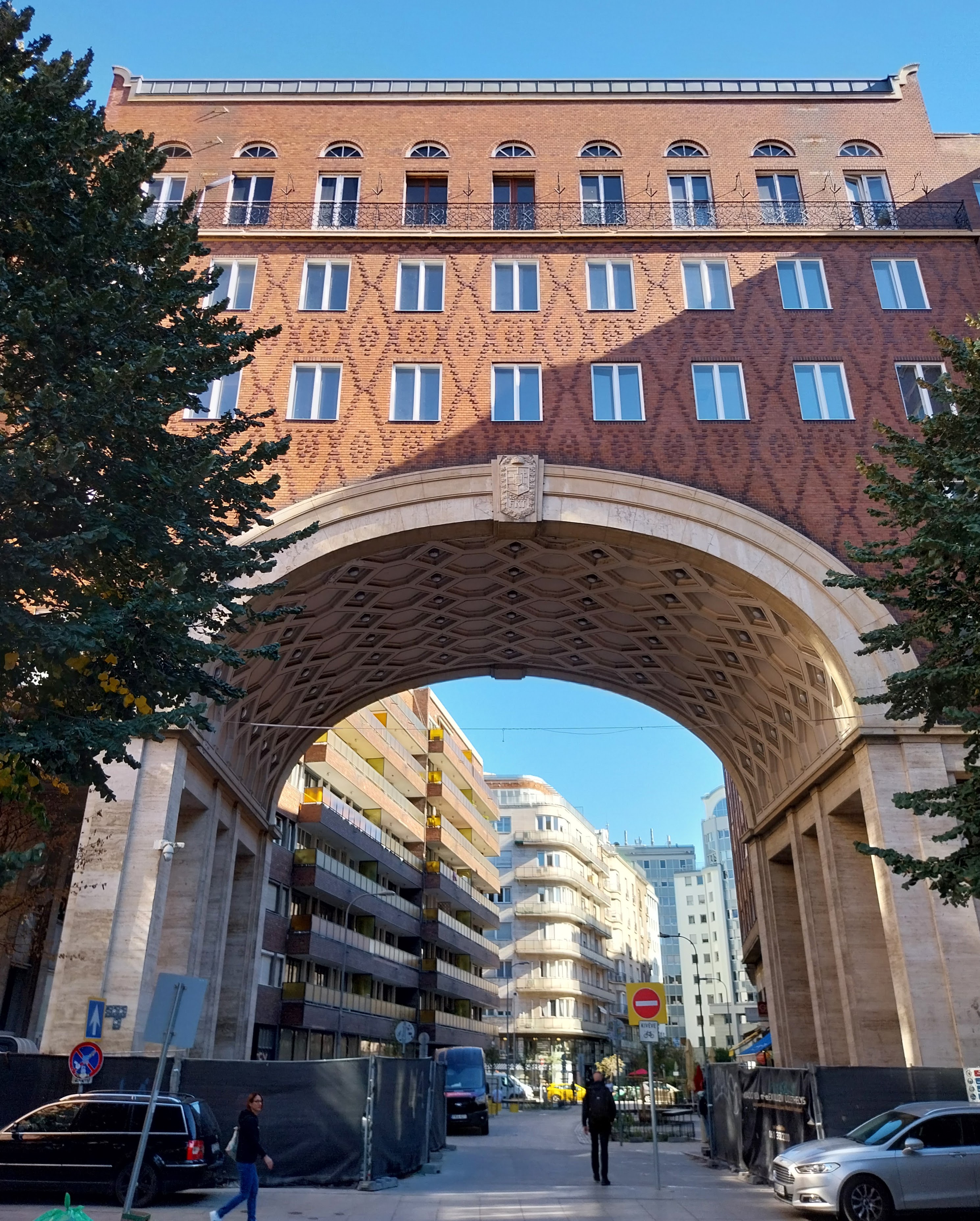
The change is particularly significant because this was the last part of the area still dominated by parked cars. The first major transformation of Madách Imre tér took place in 2014, when the part closer to Károly körút was redesigned, with parking removed and the space given back to pedestrians. For years, however, walking towards Gozsdu Udvar meant encountering another large parking area. Now that final section has disappeared as well.
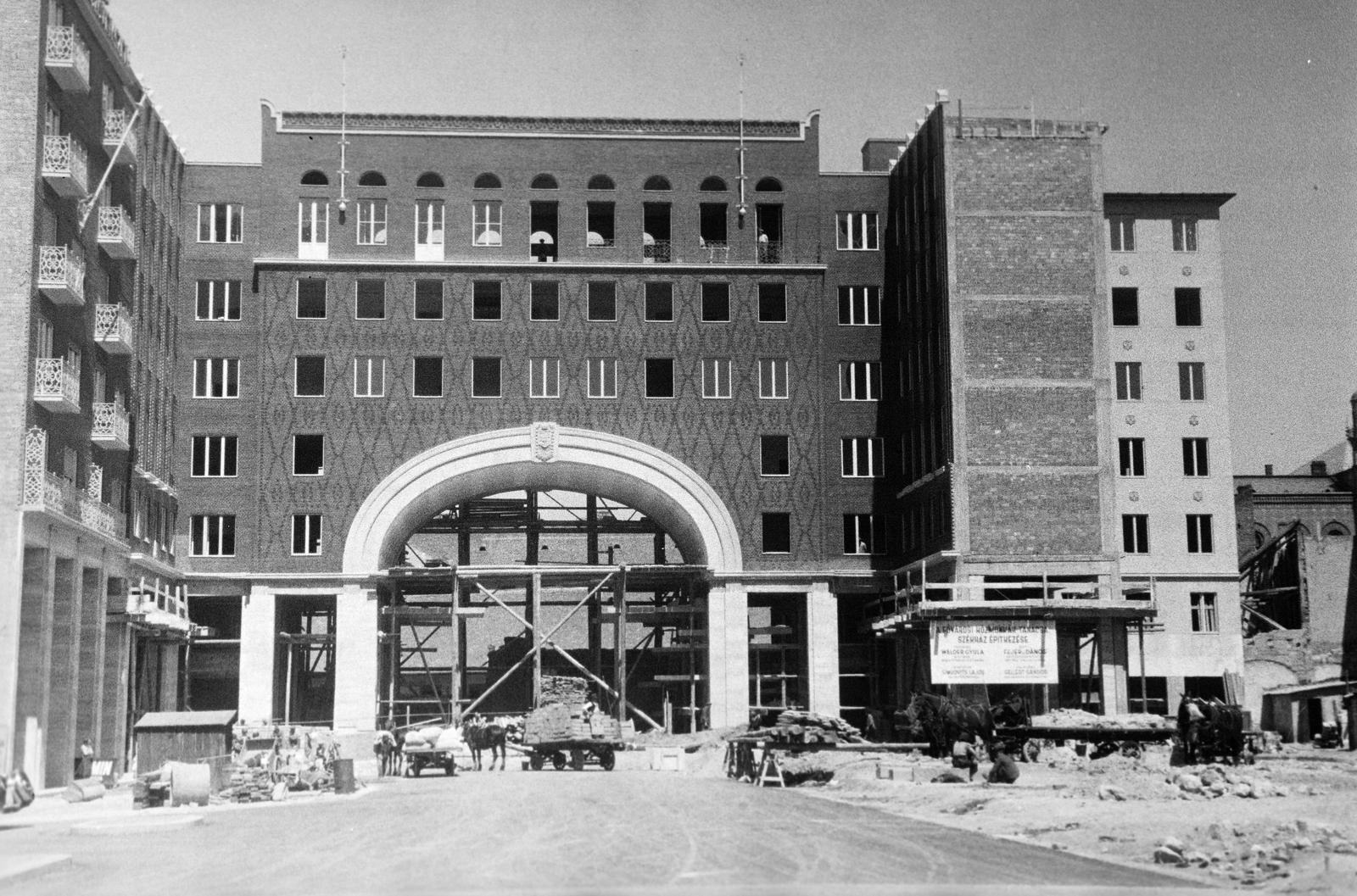
The construction of the archway in 1938 (Source: Fortepan.hu 304588)
Madách Imre tér is one of central Budapest’s most distinctive urban spaces, dominated by the monumental, reddish-brown brick Madách Houses and their striking archway. The square was created in the 1930s as the grand entrance to a planned new boulevard that was supposed to cut through Erzsébetváros, but the ambitious project was never completed. The buildings were finished in 1938, while the intended continuation of the boulevard was abandoned, leaving the monumental gateway somewhat isolated. For decades, the space in front of it was largely occupied by cars and parking; only in the 2010s did the area begin its transformation into the pedestrian-oriented public space seen today.
The new pedestrian space also creates a more continuous connection between Madách Imre tér and the surrounding streets of the historic city centre. What was once primarily somewhere to drive through or park has become a place to walk, sit and spend time.
 The area used to be filled with cars in the 80's (Sourece: Fortepan 255506)
And the transformation becomes even more striking when you look back a few decades.
In photographs from the 1970s, the same area was almost completely covered by parked cars.
