 7.1 °C


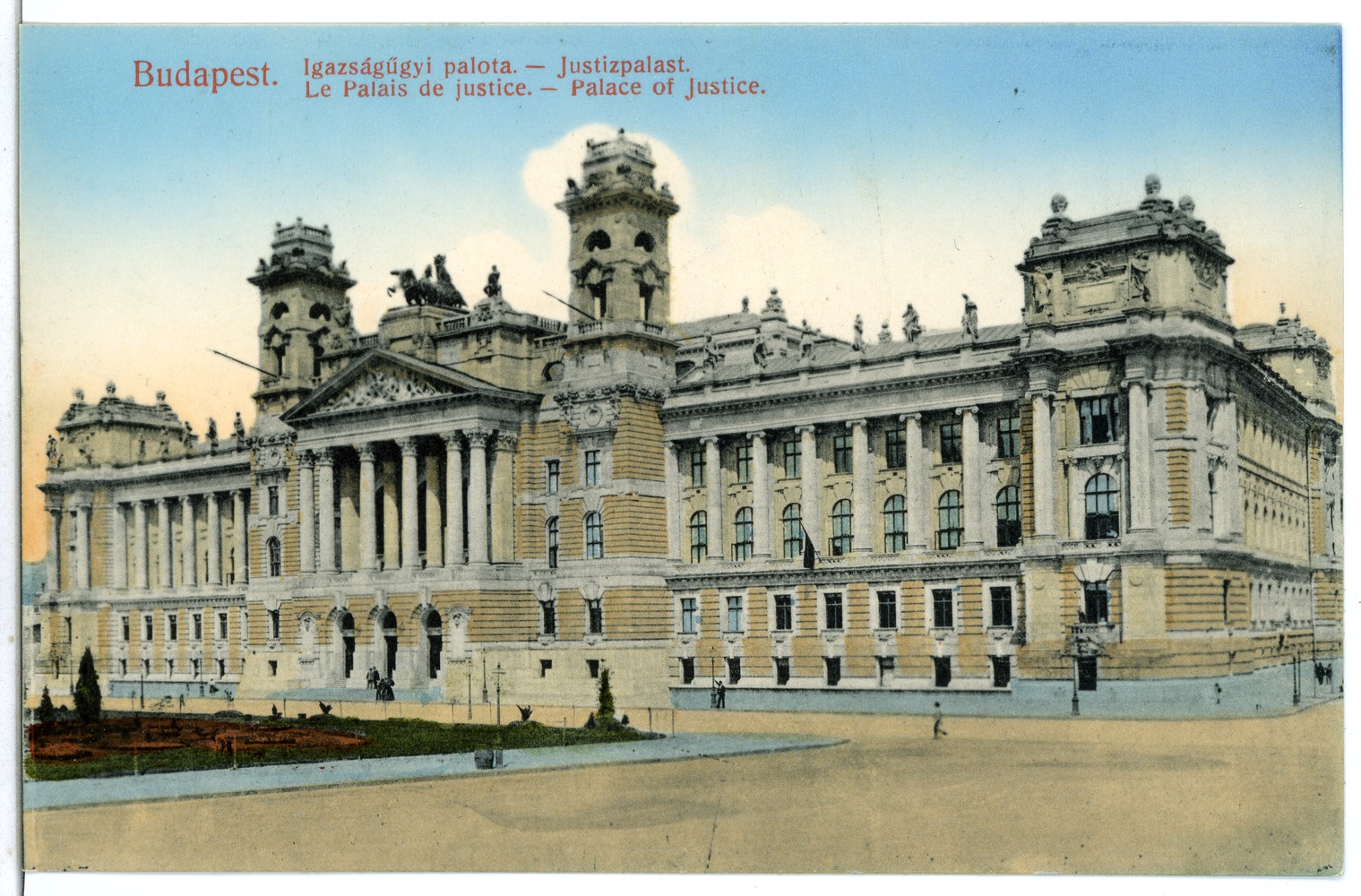
Budapest’s Palace of Justice recently opened its doors to the public for a rare glimpse inside its newly restored historic rooms. The free guided tours proved so popular that all available places were booked in less than an hour.
One of the most striking historic buildings on Budapest’s Kossuth Square is approaching the end of a major restoration. The Palace of Justice, located directly opposite the Hungarian Parliament, is expected to become the home of Hungary’s Supreme Court once again in 2027. The restoration has brought renewed attention to the magnificent building, including its monumental central hall, restored historic furnishings and the return of a famous statue of Justitia.
A landmark designed by Alajos Hauszmann
The Palace of Justice was designed by Hungarian architect Alajos Hauszmann and built between 1893 and 1896. Its ceremonial cornerstone was laid on October 20, 1896, in the presence of Emperor Franz Joseph I.
The building originally housed several important judicial institutions, including the Royal Curia, the predecessor of Hungary’s Supreme Court. However, its role changed during the communist period, when the courts moved out and the building became home to cultural institutions, including the Hungarian National Gallery and the Museum of Ethnography.
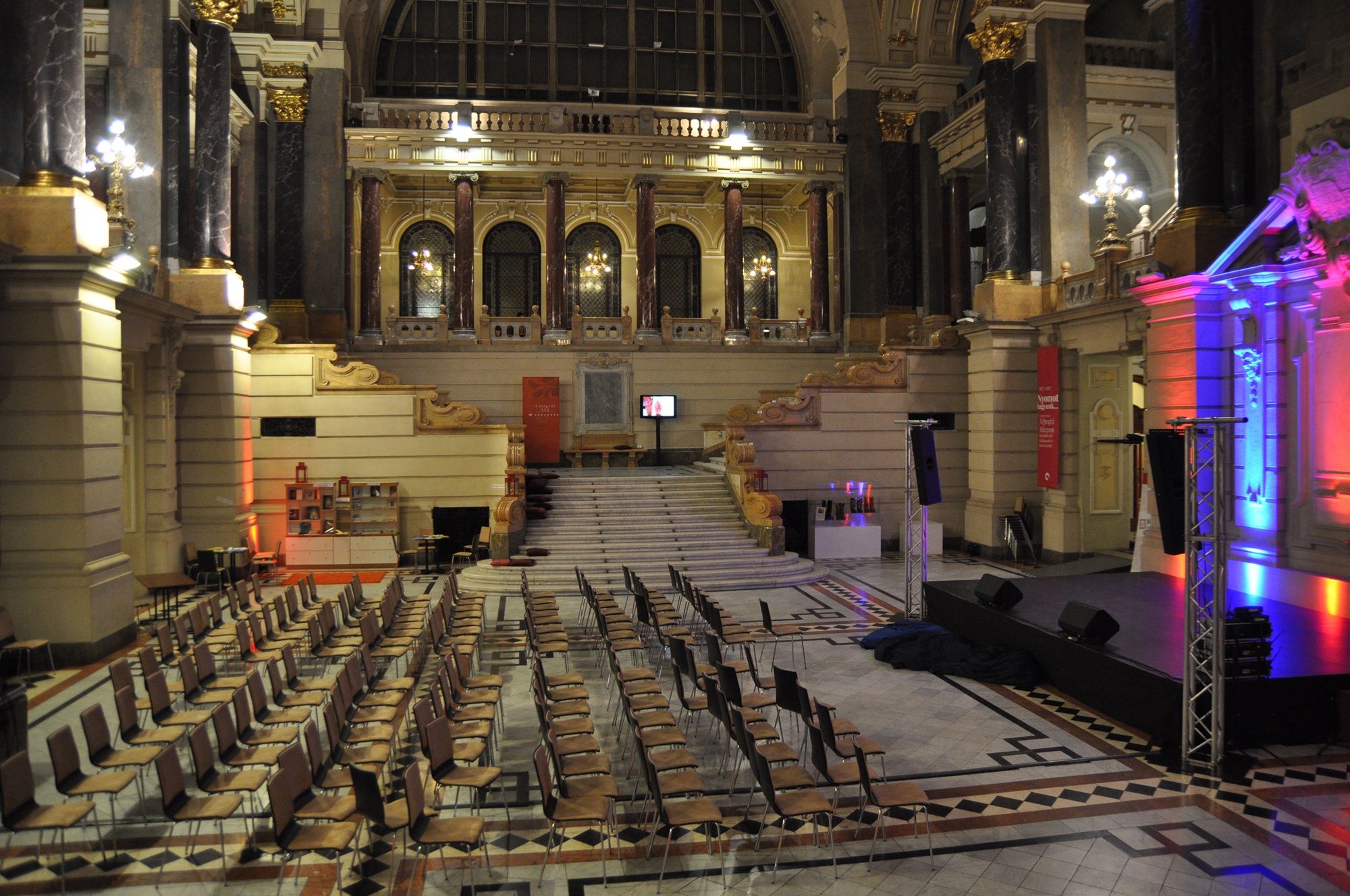
The Palace of Justice used to house the Museum of Ethnography before it was moved to City Park (Photo credit: Thaler Tamás)
After decades of use by these institutions, the Palace of Justice was eventually cleared to make way for its return to judicial functions.
Restoring the historic interiors
The restoration project was launched under the Steindl Imre Programme, with construction work beginning in 2022. The aim was to restore the building as closely as possible to its original historic appearance, based on archival research and the examination of surviving architectural details.
The work addressed both structural problems and the deterioration of the historic interiors. The building had suffered from water leaks, ageing heating systems, outdated electrical installations and damage to its exterior limestone surfaces.
One of the most remarkable features is the central hall, where visitors can admire the restored ceiling painting by Károly Lotz. The ceremonial hall has also been refurbished with historically reconstructed furniture, while decorative sculptures, tiled stoves, doors and windows have undergone restoration.
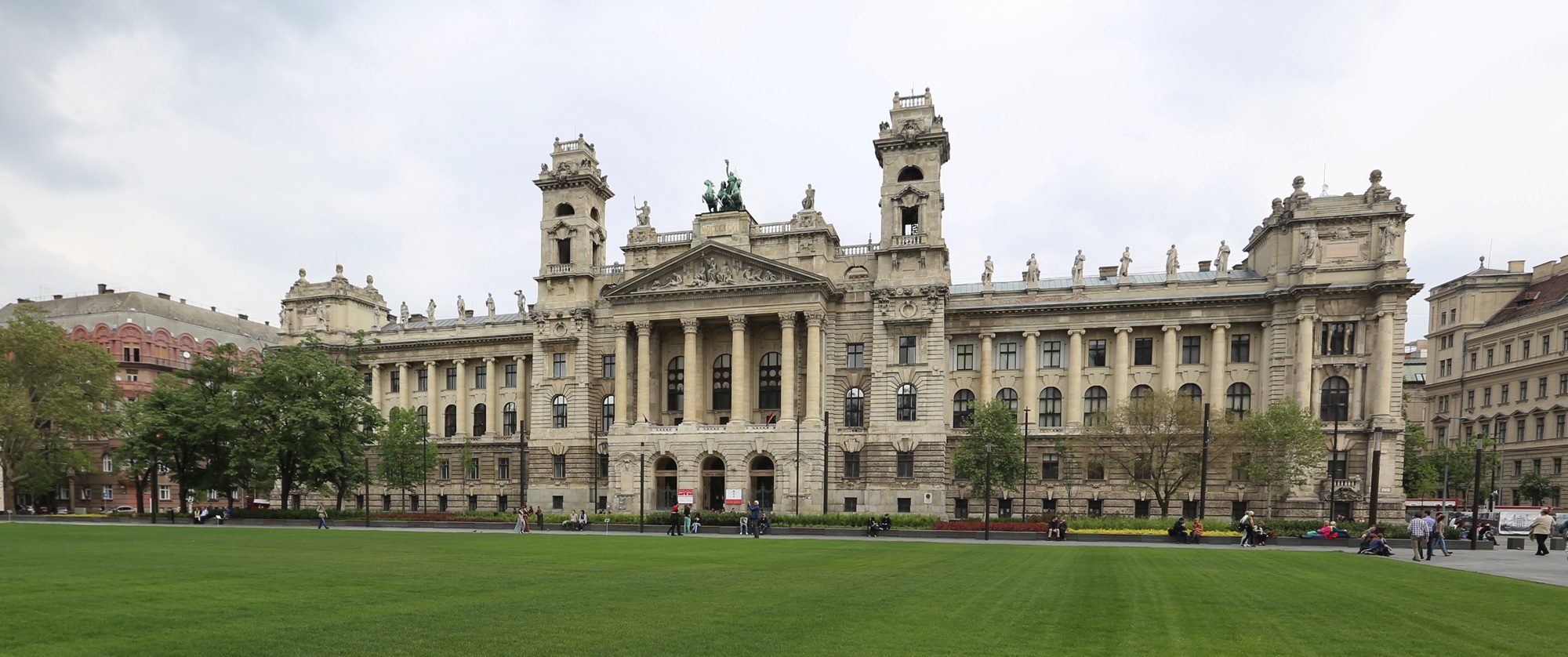
Photo credit: Thaler Tamás
A particularly significant moment was the return of Strobl Alajos’s Justitia statue to its original position. The figure, representing justice, had been removed from the hall around 70 years earlier.
The restoration also includes new facilities for the Supreme Court. A contemporary judges’ club and library have been created in the converted attic, combining modern functions with the historic building.
On October 20, 2026, Minister for Transport and Investment Dávid Vitézy presented the restored building to journalists. He said the project was approximately 90% complete, with the remaining work focusing mainly on the interiors.
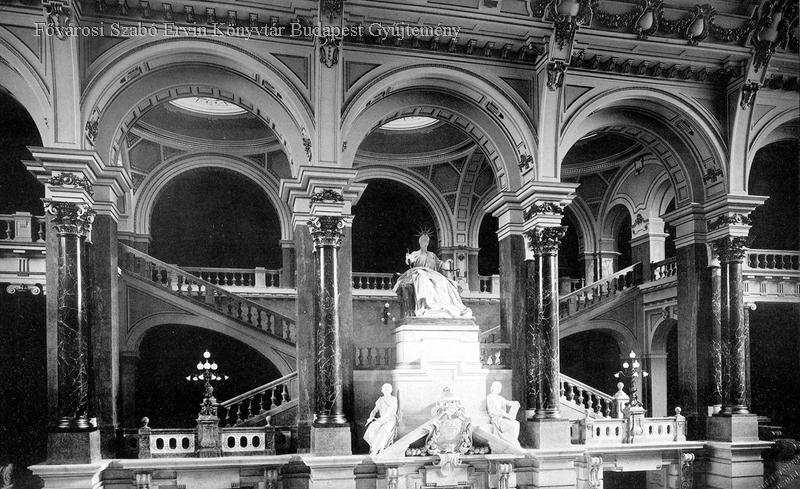 The statue of Justitia was erected in 1896 (Photo credit: FSZEK)
The restoration has a reported cost of HUF 41.5 billion. The completed building is expected to accommodate around 490 people. The Supreme Court is scheduled to begin moving in during early 2027, with full handover planned for March 15, 2027.
Vitézy also praised the quality of the heritage restoration and indicated that the expertise gained through the project could be used in future state restoration projects, including the planned reconstruction of Budapest’s Museum of Applied Arts.
The free guided tours proved so popular that all available places were booked in less than an hour. Vitézy said the government would consider organising further opportunities to visit before the Supreme Court takes full possession of the building. Once it is operating as a court, access will be subject to stricter security arrangements, and visits are expected to take place only through organised tours.