 7.1 °C


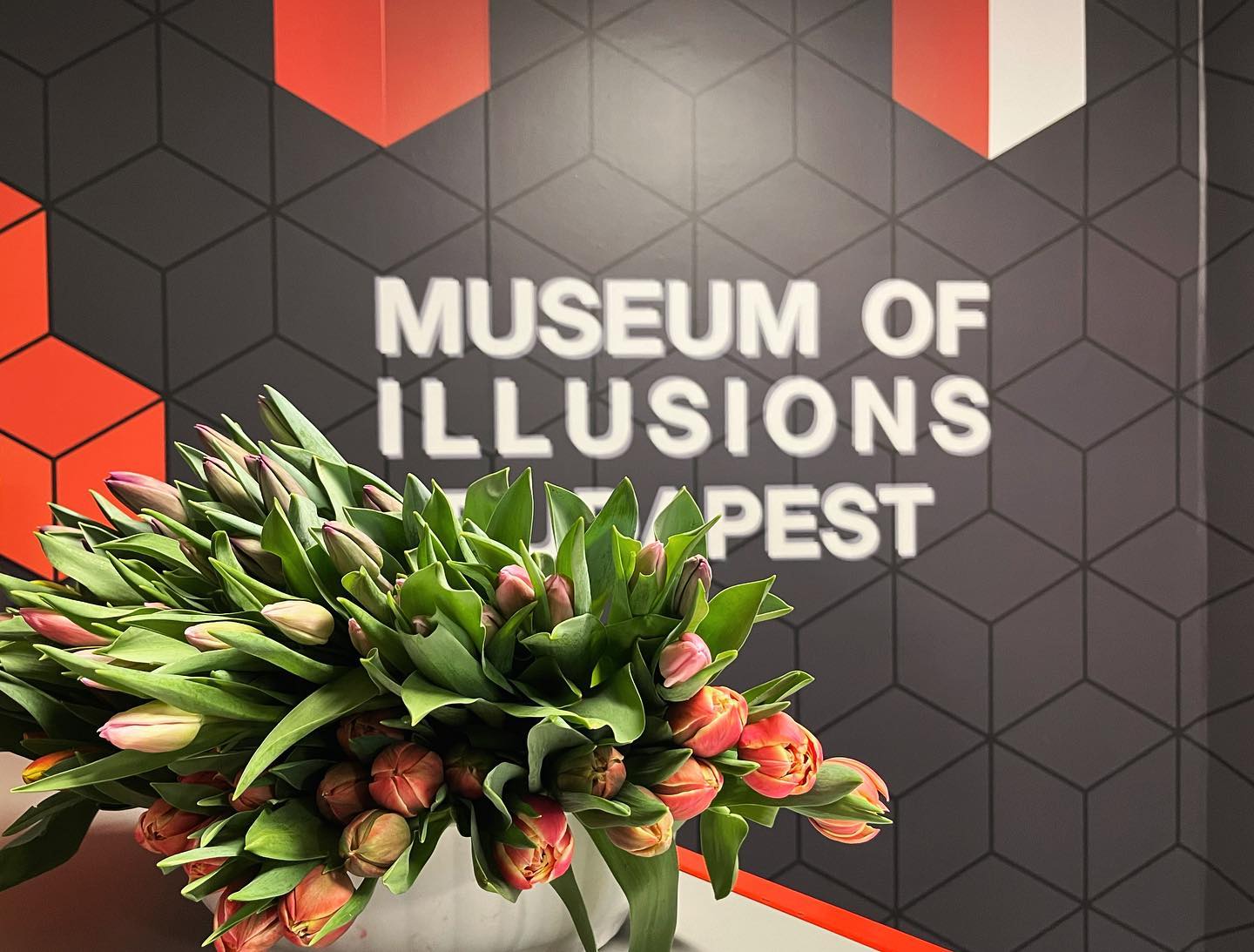
Budapest’s Museum of Illusions is getting ready to blow your mind all over again! The museum announced on social media that its bigger, bolder and more mind-bending experience is here, with doors reopening on October 13.
What happens when the floor seems to tilt beneath your feet, your reflection multiplies, or an ordinary room makes you look impossibly tall or tiny? Budapest’s Museum of Illusions reopens on October 13 with a redesigned experience promising new ways to challenge your senses.
After closing its previous exhibition in August, the Museum of Illusions in central Budapest is welcoming visitors back with a refreshed concept. The museum’s reopening announcement promises a bigger, bolder and more mind-bending experience, with renewed spaces designed around interaction, visual effects and unusual photo opportunities.
For tourists, the attraction offers a welcome change of pace from Budapest’s grand architecture, historic churches and traditional museums. Here, you are not simply looking at exhibits behind glass. You walk through the installations, experiment with perspectives and discover how easily your eyes can mislead you.
Walk into a world where perspective makes the rules
One of the main attractions of the Museum of Illusions is its collection of rooms that manipulate the way visitors perceive space, balance and size. Rather than relying on digital screens alone, many illusions work through the physical arrangement of the room, carefully chosen viewpoints and the way the brain interprets visual information.
The Tilted Room, for example, uses an angled environment to confuse your sense of balance. Even when the floor appears solid, your brain receives conflicting visual and physical cues, making it difficult to judge what is level. The result is particularly entertaining when you try to stand naturally or pose for a photograph.
The Vortex Tunnel creates a different challenge. Visitors walk along a stationary walkway surrounded by a rotating visual structure, producing the disorienting sensation that the ground is moving. Your eyes suggest that you are losing your balance, even though the walkway itself remains stable.
The Reversed Room turns familiar surroundings upside down, creating photographs in which visitors appear to defy gravity. These installations work particularly well when friends or family members pose together, allowing the resulting images to tell a convincing visual trick.
Such rooms demonstrate a central principle behind optical illusions: vision is not a straightforward recording of reality. The brain combines visual signals with assumptions about gravity, distance and the shape of objects to construct the world we perceive. When those signals contradict one another, even a perfectly ordinary room can become an extraordinary experience.
Become part of the exhibition
The museum’s installations are designed to be experienced rather than simply observed. At the Cloning Table, visitors can create the appearance of several versions of themselves sitting around the same table. The Kaleidoscope uses reflections to multiply images, while the Head on a Platter installation creates a playful illusion that is particularly suited to holiday photographs.
The museum also features optical illusions and holograms. These play with the way the eye interprets shapes, depth, movement and contrasting visual information. Some images appear to change depending on how you look at them, while holographic displays create the impression of three-dimensional objects where there is only a carefully constructed visual image.
The combination of hands-on installations, visual puzzles and photographic opportunities makes the attraction suitable for a range of visitors, from families with school-age children to couples and groups of friends. It also offers an indoor alternative when Budapest’s weather is too hot, cold or wet for a full day of outdoor sightseeing.
 Museum of Illusions source: The museum's facebook page
What has changed during the renovation?
The museum closed its previous exhibition in August to undergo a major transformation, rather than simply taking a short break for routine maintenance.
Its reopening announcement describes the new experience as bigger and bolder, with an emphasis on renewed visual surroundings and interactive elements. The announcement also promises a more striking presentation and new opportunities for photographs.
How to get there?
The Museum of Illusions is located at Bajcsy-Zsilinszky út 3 in Budapest’s District VI. It is less than a five-minute walk from Deák Ferenc Square, one of the city’s main public transport interchanges, served by three metro lines.
Its location makes it easy to combine a visit with sightseeing around St Stephen’s Basilica, a walk along Andrássy Avenue or an exploration of the surrounding downtown streets. You can fit the attraction into a day of sightseeing without travelling far from Budapest’s central landmarks.
The museum is scheduled to reopen on October 13, 2026. For current opening hours, admission prices and ticket availability, consult the official Museum of Illusions Budapest website: https://illuziokmuzeuma.hu/en/ before visiting.